
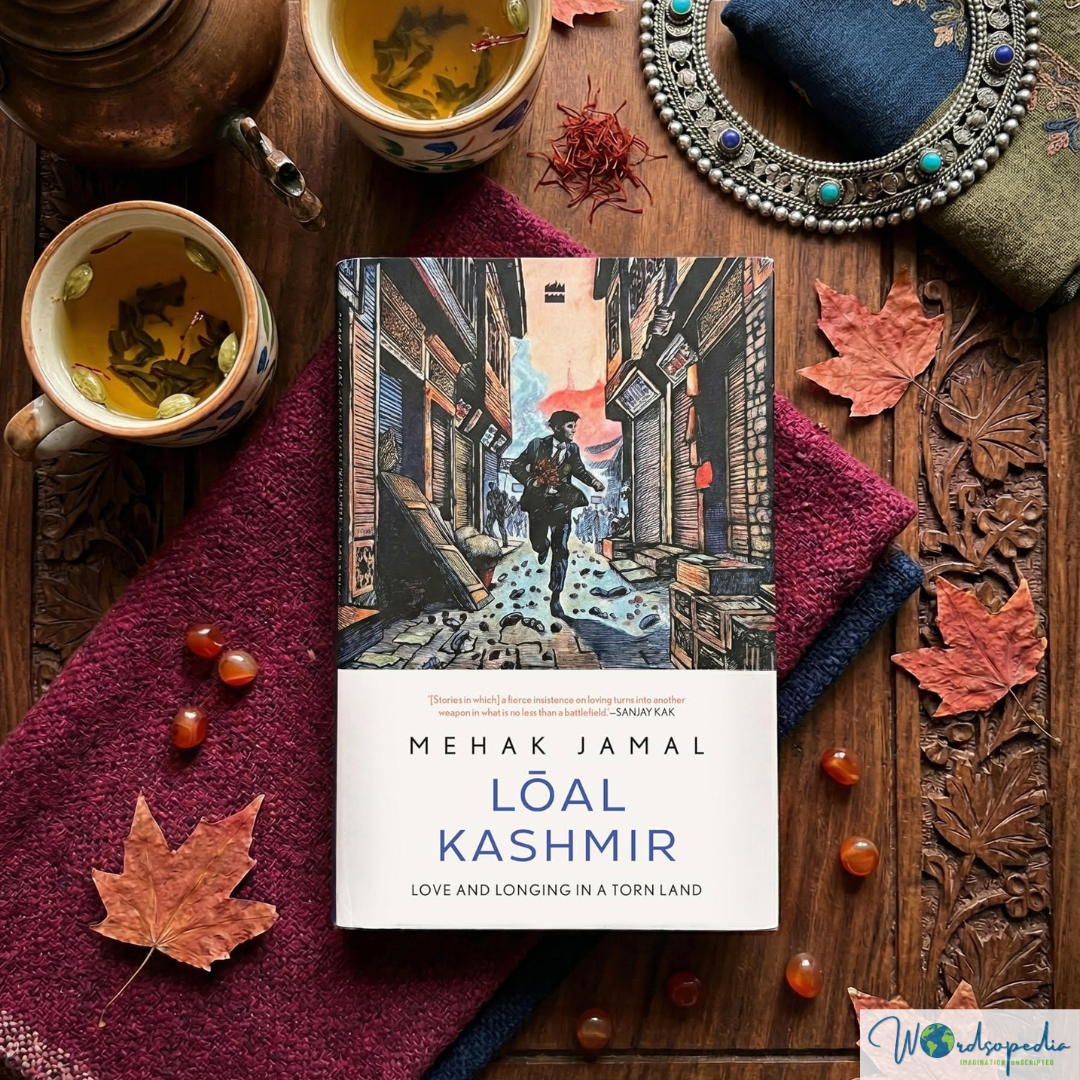
Every book finds its reader at the right time. With the current uncertainty of war looming over us, I couldn’t have picked up a better book than Mehak Jamal’s Loal Kashmir: Love and Longing in a Torn Land. A book that does something quietly radical: it insists on love — not in spite of turbulence, but inside it, woven into it, sometimes broken by it, sometimes made more tender because of it.
I want to start with the word itself. Loal. A Kashmiri word for love and affection — but not a simple, dictionary-definition love. It carries weight. Longing. The kind of feeling that doesn’t let go even when everything around it is falling apart. Jamal doesn’t just title her book with this word; she builds the entire architecture of her collection around it. And that, more than anything else, is what makes Loal Kashmir worth your time.
What the book is — and what it isn’t
Loal Kashmir is not fiction. Jamal is clear about that in her author’s note, and that clarity matters. These are true narratives — real people, real relationships, real lives altered by decades of conflict in Kashmir. As a filmmaker, Jamal has an eye trained to notice what others might walk past: the small gesture that contains a world, the pause before a sentence that holds more meaning than the sentence itself. That sensibility is evident throughout. These aren’t embellished stories cleaned up for reader comfort. They are testimonies, shaped into narrative.
The sixteen stories are organized into three sections: Ōtrü (day before yesterday — the early 1990s militancy period), Rath (yesterday — post-2008 uprisings), and Az (today — after the abrogation of Article 370 in 2019). It isn’t just a timeline. It’s a before-and-after in three acts — and what strikes you is how little the emotional weather of the valley changes, even as the political reality is rewritten from above. Decades pass. Governments make decisions in Delhi. The seasons change in the valley. And still people fall in love and try to hold onto each other.
The army, the conflict, and a complicated truth
I want to be honest here, because a review that isn’t honest isn’t worth reading. I am for the Indian Army. I say this not as a political statement, but as a personal one. The army is a living institution — made up of real people, real families, real sacrifice. Reading Loal Kashmir as someone who holds that belief was an experience I hadn’t fully anticipated.
The army is present throughout this book — at checkpoints, in crackdowns, in the daily texture of Kashmiri life. The attitude of many of its characters towards the Indian Army carries a weight of resentment that is palpable and, at times, one-sided. I felt it. There were moments I wanted to push back, to say: this is one perspective, not the whole picture. I kept waiting for the book to surprise me — to include a soldier’s wife, a CRPF family, someone on the other side of the resentment. It doesn’t.
Interestingly, the very first story — “Love Letter” — offers a rare and almost tender counterpoint: a Kashmiri teenager, Javeed, has soldiers laughing and sharing in his embarrassment as they force him to read out a love letter found in his pocket during a crackdown. For the villagers in that story, love briefly becomes a bridge with the soldiers, even amid conflict. That moment — small, human, almost funny — is the kind of nuance I wished the collection had sustained.
The abrogation of Article 370 dominates the final section. Families separated. Communication severed. Lovers stranded on opposite ends of a silence imposed from above. These stories are real and the pain in them is real. But they are told from a single vantage point — and a book that presents itself as a collection of human truths would have been richer for including more of them.
The missing voices — Kashmiri Pandits
There is one story — “Matador” — in which Sagar, a Kashmiri Pandit boy, falls for a Muslim girl, Aalmeen, navigating their relationship in the shadow of the militancy years. He learns quickly not to reveal his full name, to always look over his shoulder. It is a quietly devastating story, and credit to Jamal for including it. But it is one story among sixteen.
The Kashmiri Pandit exodus — one of the largest forced displacements in post-independence India — is the wound at the heart of Kashmir’s modern history. Hundreds of thousands of Pandits left their homes, their language, their land. Kashmir’s grief doesn’t belong to one community. The Pandits carry it too — in a different key, from a different distance, but no less real. Their loal for a place they could no longer return to is as much a part of this valley’s story as any other.
The Kashmiri words, the authenticity, the ‘where are they now’
One of the unexpected pleasures of this collection is its language. Kashmiri words and phrases are woven through the text — not as decoration, but as cultural truth. They reminded me that I was a visitor in this landscape, invited in by the author, and that these stories belong first to the people who lived them.
What I found genuinely moving is the inclusion of notes at the end of each story — brief updates about where these real people are today, what happened after the events narrated. These postscripts turn the experience from just reading a book into something more like sitting across from someone and listening — really listening. A relationship that survived. Another that didn’t. A person who left the valley. A person who chose to stay. Each one lands differently.
Where the collection stumbles
It would be dishonest to pretend the book is flawless. By story eleven, I was reading faster because I knew roughly where each story was going. That’s not a good sign. The sixteen stories, thematically unified, are also tonally similar — restrained grief, interrupted love, the weight of a conflict that never quite ends. While that is true to the reality of Kashmir, it also means the collection doesn’t fully exploit its range. A reader who sits with it across long stretches may find themselves numbed when they should be sharpest.
There is also a narrowness to the love stories that occasionally feels limiting. That one Kashmiri word — loal — does more work than the entire title. Once you understand it, you read every story differently. And yet Jamal largely confines it to romantic love. Loal lives in the way a mother looks at a son before he goes out in the evening not knowing if he’ll return. It lives in the bond between neighbors who have seen each other’s worst days. The deeper emotional textures of Kashmiri community life — family, friendship, collective grief — largely remain offstage. That is a missed opportunity in a book that had the range to go there.
A book for this moment
And yet. For all of this, Loal Kashmir is a book I’m glad exists — and one I’m glad I read now. Because it insists that these are people — not a conflict, not a headline, not a statistic. They have names. They have desires. They waited by phones that didn’t ring and wrote letters they weren’t sure would arrive.
The stories are imperfect in their telling and incomplete in their coverage. But the reason Jamal wrote this book — to say, this happened, these people loved each other, and it mattered — that impulse I understand completely. Especially now, when the world feels like it is once again holding its breath.
✦ The Highlights
- That one Kashmiri word — loal. Once you understand it, you read every story differently. Love as longing, love as loss, love as quiet resistance. It does more work than the entire title.
- Three acts, not just a timeline. Ōtrü, Rath, Az — day before yesterday, yesterday, today. What strikes you is how little the emotional weather of Kashmir changes even as the political reality is rewritten above it.
- Authentic, lived-in texture. The Kashmiri language woven through the text, the filmmaker’s eye for scene and detail, the restraint — Jamal never over-explains and never over-emotes.
- The “where are they now” postscripts. They turn reading into listening. Each one lands differently. This is the book’s quiet masterstroke.
- The humanity in the smallest moments. When the book allows complexity to breathe — as in “Love Letter” — it shows exactly what it is capable of.
✦ The Hiccups
- By story twelve, I was reading faster for the wrong reasons. Sixteen stories in the same emotional key — restrained grief, interrupted love — and the cumulative weight starts to feel like repetition rather than resonance.
- I kept waiting for the book to surprise me on the army. A soldier’s wife. A CRPF family. Someone on the other side of the resentment. It never comes. One perspective, consistently held, is not the same as the whole truth.
- Kashmir’s grief doesn’t belong to one community. One story nods to the Kashmiri Pandit experience. The exodus of hundreds of thousands deserved far more. A book about a torn land must reckon with all who were torn from it.
- Loal is bigger than romance. Familial love, community bonds, collective grief — largely offstage. The book had the range to go there. It mostly doesn’t.
Loal Kashmir is imperfect, one-sided at times, and occasionally repetitive. But it is also necessary. Read it for the word loal alone — because once it enters your vocabulary, you’ll find yourself using it for the rest of your life.
Wordsopedia Rating: 3.5 / 5
This review reflects my honest and voluntary opinion.