
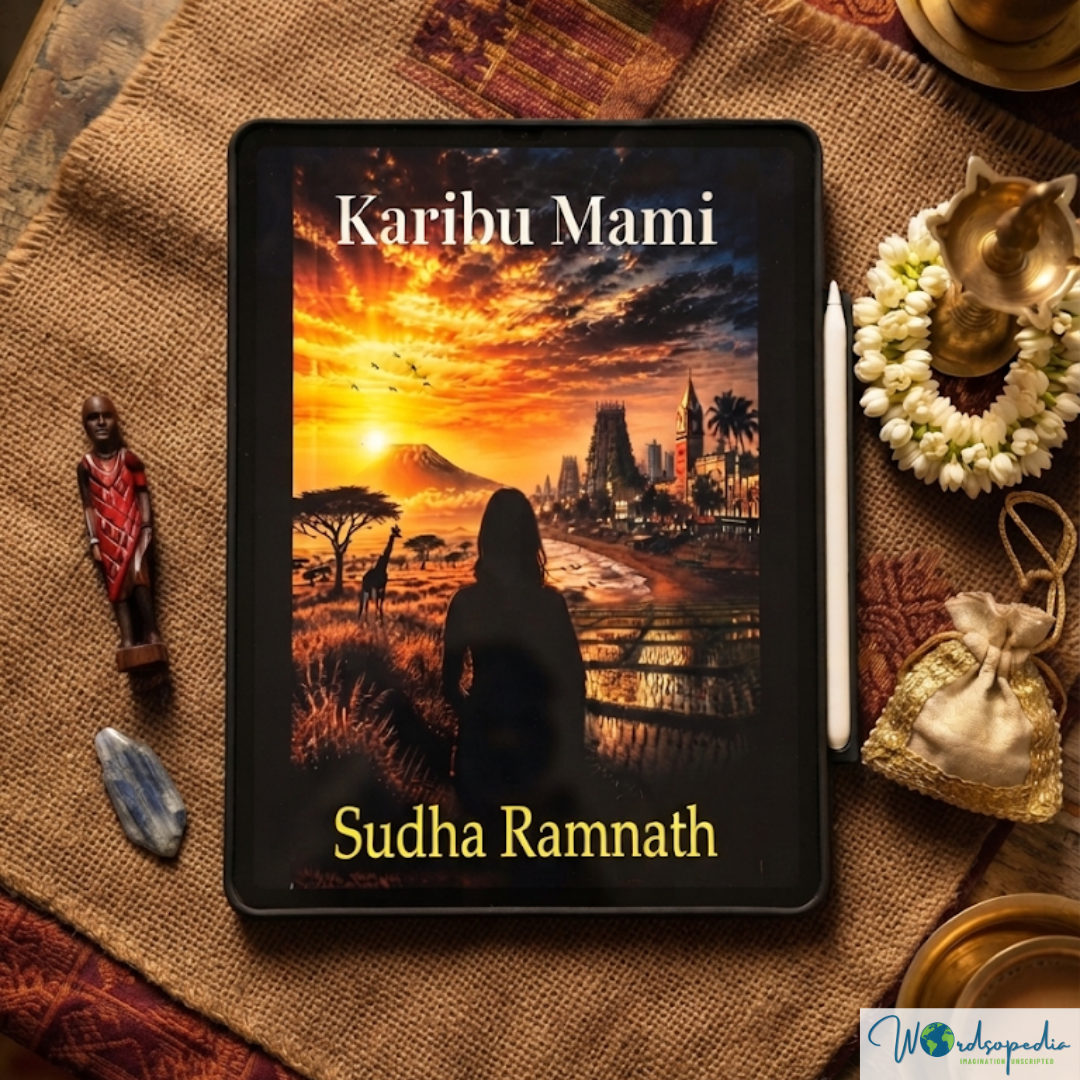
I recently read Sudha Ramnath’s Karibu Mami, an interesting title for an equally interesting story. It’s based on the author’s experiences of having lived in Tanzania, and I was so curious to know which elements are fictionalised! Having known her for her acumen as a thriller author, it was interesting to read something from a different genre.
⚡ The Quick Take
The Vibe: Warm, chatty and full of sunlit detail. Like a friend telling you about the years she lived abroad.
Best For: Readers curious about expat life in Africa, and anyone who has moved countries and found their friends turning into family.
Key Takeaway: The book shines when it shows you Tanzania and the friendships that hold an expat family together. However, in my personal opinion, it is weaker as a plotted story.
Wordsopedia Verdict: 3.5/5
What Is Karibu Mami About?
Vasanthi’s husband gets a work opportunity in Tanzania, and the whole family moves to Dar es Salaam. Africa has been Vasanthi’s dream destination for a long time, but not everyone around her is convinced. The kids don’t want to leave their friends. Her relatives warn her about crime, poverty and disease. The book follows her first years as an expat, one small everyday moment at a time.
The People
Vasanthi is the heart and soul of the book. She is a mother, a wife and a woman caught between staying in her comfort zone and answering the pull of adventure, and her doubts on all three fronts are well portrayed.
The characters start out hesitant, and then they adjust. The kids make friends, visit new places and have adventures of their own. What I liked most was Vasanthi’s friendship with Rita’s family, and the way the two families are there for each other. That is very true for people living outside India, where friends and neighbours become an extended family.
The dadas reminded me of my own helpers from the Philippines and Sri Lanka, who became part of the family and learnt to cook Indian food.
Narration, Pacing, and Story Arc
The narration is smooth, almost like talking to a friend. The chapters are short, built around the daily happenings of Vasanthi’s life. The proverbs from different parts of Africa at the opening of each chapter were really delightful to read.
The arc is one of adjusting rather than of big events: hesitation first, then a slow settling in. Along the way the book asks how you make a home in a new country without losing the old one. It also shows the wide gap between the lives of locals and expats, and it doesn’t look away from it.
The Writing
The language is simple, yet so visual that I felt I was on those picturesque beaches, in the verdant jungles or out on safari. The vernacular bits are in the right proportion. I picked up new words and learnt a lot about African culture and customs, and about the Gujaratis who have made their lives there.
The recurring idea of nammalalava, our people, was endearing. It is such a beautiful concept. I loved how Vasanthi’s family makes everyone, irrespective of their origins, a part of “our people.” I am unsure though, how a reader unfamiliar with this sentiment connects with the thought.
The idea of the book is interesting. It is an honest portrayal of an expat’s life in an unknown land. However, in my opinion, the execution falters. A tighter edit would have lifted the whole book.
A few lines that stayed with me:
I learned to breathe through the fear. Each time the pressures pressed in, I reminded myself that panic only feeds itself. Calm is a shield.
A problem is only a problem if you treat it like one. If you call it an adventure, it becomes one.
Distance taught me this irony: the darker the night, the brighter the memory of home. And so I carried India within me, a thousand‑wala that sparked even in silence.
❖ The Highlights
➤ The Setting: Dar es Salaam and Tanzania, seen through beaches, jungles and safaris.
➤ The Language: Simple and visual.
➤ The Proverbs: A good opening to every chapter.
❖The Hiccups
➤ The story moves in circles. Vasanthi’s inhibitions and doubts feel repetitive, and so does the narration about attending Indian festivals.
➤ The dialogues felt forced at times.
If you want an exploratory look at an expat’s life in Africa, pick up Karibu Mami. It’s entertaining and enriching. Read it for Vasanthi’s journey, for the Tanzania she shows us, and for the friendships that turn neighbours into family. Just go in for the setting and the warmth rather than a tightly plotted story.
Frequently Asked Questions
- Is Karibu Mami a thriller?
No. Sudha Ramnath is better known for suspense and thrillers, but this is a family and expat story.
- Is it a true story?
It draws on the author’s own experience of living in Tanzania.
- What is the setting of the book?
Dar es Salaam, Tanzania, and the Indian expat community there.
- What are the primary themes explored?
Expat life, friendship as extended family, comfort zone versus adventure, motherhood, home and memory, and the gap between expats and locals.
This review reflects my honest and voluntary opinion.